
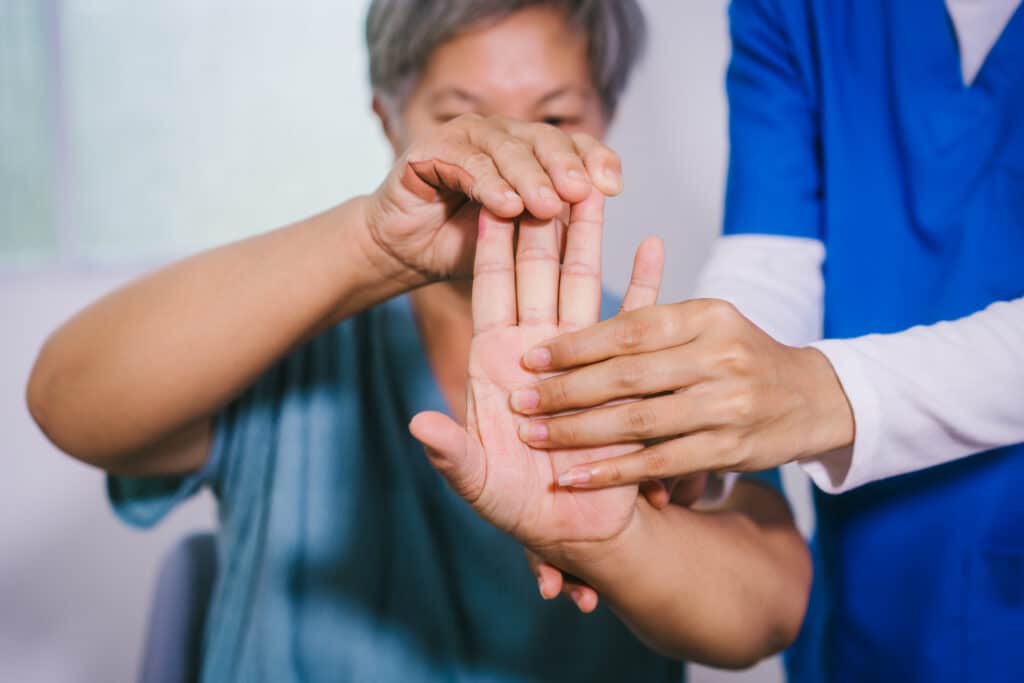
Hand Pain
Your hands are part of almost everything you do. You use them to type, text, cook, drive, work, open doors, carry groceries, hold a coffee cup, and take care of the people and things that matter most.
When hand pain shows up, even small tasks can feel frustrating. Pain, stiffness, tingling, weakness, or swelling can make it harder to grip, pinch, lift, write, dress, or get through the day comfortably.
Physical and occupational therapists can help identify the possible causes of your pain and develop a plan to improve movement, strength, comfort, and daily hand function.
Common Symptoms of Hand Pain
Hand pain can feel different depending on the cause. Symptoms may start suddenly after an injury or build slowly over time from overuse, arthritis, nerve irritation, or another condition.
Common hand and wrist symptoms include:
- Pain in the palm, fingers, thumb, wrist, or back of the hand.
- Numbness or tingling in the fingers or thumb.
- Stiffness, swelling, or warmth around a joint.
- Weak grip or trouble pinching.
- Clicking, catching, or locking in a finger.
- Pain that gets worse with typing, gripping, lifting, or twisting.
- Trouble making a fist or fully straightening the fingers.
- Sensitivity around a scar, wound, or injured area.
- Changes in hand color, temperature, or sensation.
If hand symptoms are changing what you can do, a therapy evaluation can help you understand what may be going on.
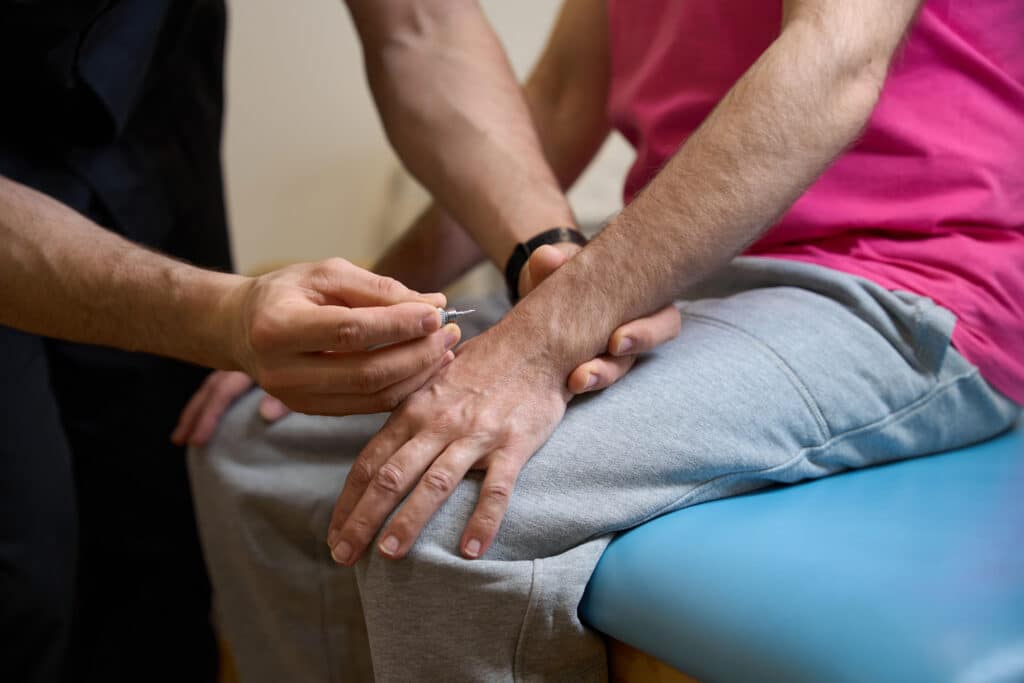

Hand Pain Treatment at Ivy Rehab
Hand pain treatment starts with understanding how your hand, wrist, and upper extremity are working together. Your therapist will ask about your symptoms, daily activities, work demands, hobbies, medical history, and goals.
They may assess range of motion, grip strength, pinch strength, swelling, sensation, pain, coordination, scar mobility, and functional tasks. If you are recovering from surgery, your therapist will follow your surgeon’s protocol and adjust care based on your healing stage.
Treatment may include custom splinting, manual therapy, therapeutic exercises, tendon and nerve gliding, scar management, swelling control, desensitization, ergonomic education, joint protection, adaptive equipment, and a home exercise program.
Some Ivy Rehab clinics also have certified hand therapists (CHTs). A CHT is an occupational therapist or physical therapist with advanced training and experience in hand and upper extremity rehabilitation.
Who Can Benefit From Therapy for Hand Pain?
Physical therapy or occupational therapy may help people with hand pain, wrist pain, weakness, stiffness, nerve symptoms, or trouble using the hand during daily activities.
Therapy may be helpful if you:
- Have carpal tunnel syndrome, trigger finger, or De Quervain’s tenosynovitis.
- Have arthritis pain or stiffness in the hand, thumb, or wrist.
- Are recovering from hand, wrist, or upper extremity surgery.
- Have a wrist sprain, tendon injury, fracture, or soft tissue injury.
- Have numbness, tingling, weakness, or changes in hand sensation.
- Have a ganglion cyst or Dupuytren’s contracture that affects hand use.
- Need a custom splint, adaptive equipment, or joint protection strategies.
- Have trouble gripping, pinching, typing, writing, lifting, dressing, cooking, or completing work tasks.
If your hands are not working the way you need them to, therapy can help you understand the problem and what may help.
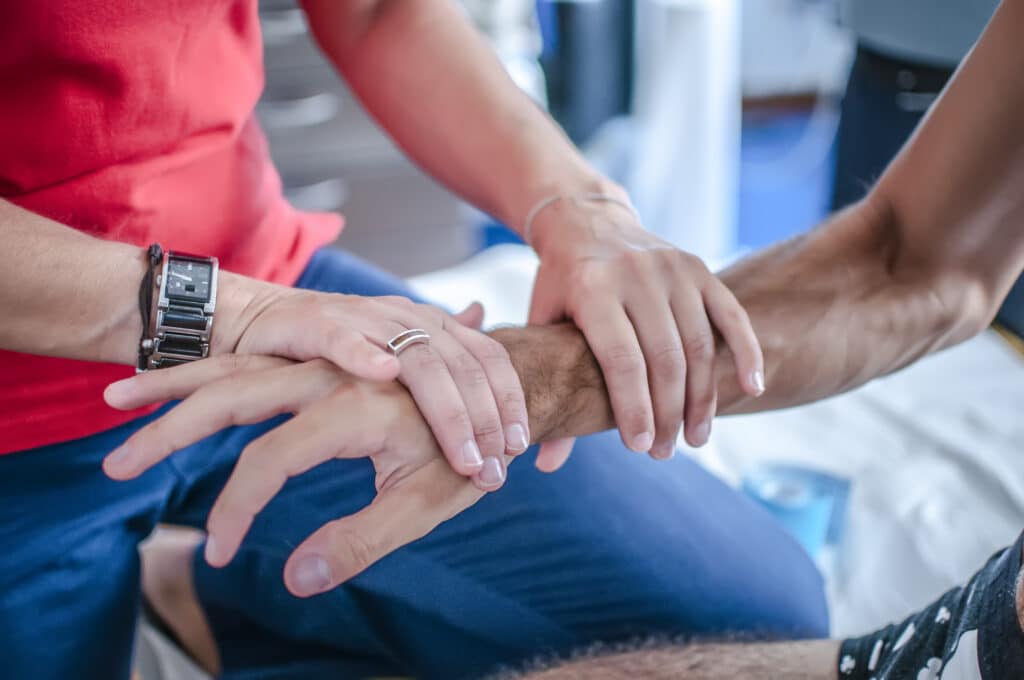
Common Causes of Hand Pain
Hand pain can come from joints, tendons, nerves, ligaments, muscles, or soft tissue. It may also be related to a medical condition, repetitive activity, injury, surgery, or changes in how the hand and wrist move.
The right treatment starts with the right explanation. Your therapist will look at where your pain is, what triggers it, and how it affects daily use of your hand.
Carpal Tunnel Syndrome
Carpal tunnel syndrome happens when the median nerve is compressed at the wrist. It may cause numbness, tingling, burning, weakness, or pain in the thumb, index finger, middle finger, and part of the ring finger.
Symptoms may feel worse at night, with gripping, or after repetitive wrist and hand activity. Therapy may include splinting, nerve and tendon gliding exercises, ergonomic education, activity changes, strengthening, and manual therapy.
Trigger Finger
Trigger finger can cause a finger or thumb to catch, click, lock, or feel stuck when bending or straightening. It happens when the tendon or tendon sheath becomes irritated and does not glide smoothly.
Mild or moderate symptoms may improve with splinting, activity modification, gentle exercises, and therapy-guided movement. More severe cases may need additional medical care, such as an injection or surgical release.
Hand Osteoarthritis
Hand osteoarthritis can cause pain, stiffness, swelling, and joint changes in the fingers, thumb, or wrist. It often affects grip, pinch, opening jars, turning keys, writing, or using small objects.
Therapy may focus on joint protection, strengthening, range of motion, custom splinting when appropriate, adaptive equipment, and activity modifications that reduce strain during daily tasks.
Rheumatoid Arthritis of the Hand
Rheumatoid arthritis is an autoimmune condition that can cause joint inflammation, pain, swelling, stiffness, and changes in hand function. The hands and wrists are commonly affected.
Hand therapy can support comfort, joint protection, splinting, activity modification, range of motion, and strategies for daily tasks. Your therapist may also coordinate with your physician or rheumatology team when needed.
De Quervain’s Tenosynovitis
De Quervain’s tenosynovitis affects the tendons on the thumb side of the wrist. It can cause pain near the base of the thumb, especially with lifting, gripping, pinching, twisting, or caring for a baby.
Therapy may include splinting, activity changes, gentle mobility work, strengthening when appropriate, and education on ways to reduce stress on the thumb and wrist.
Ganglion Cysts
Ganglion cysts are fluid-filled lumps that can develop near joints or tendons in the hand or wrist. Some do not cause symptoms, while others may create pain, pressure, stiffness, or limits with wrist movement.
If a cyst affects hand function, therapy may help address related movement patterns, comfort, strength, and recovery after medical treatment if aspiration or surgery is needed.
Dupuytren’s Contracture
Dupuytren’s contracture causes thickened tissue in the palm that can gradually pull one or more fingers into a bent position. It often develops slowly.
Therapy may help with range of motion, splinting, scar care after treatment, and strategies to support hand function. More advanced contractures may need evaluation by a hand specialist.
Wrist Sprains and Tendon Injuries
Wrist sprains can happen after a fall, twist, or sudden impact. Tendon injuries may develop after trauma, overuse, or repetitive activity.
Symptoms may include pain, swelling, weakness, stiffness, or trouble gripping and lifting. Therapy may include protected movement, strengthening, manual therapy, splinting or bracing, and a gradual return to activity.
How We Approach Hand Pain
Step 1: Hand and Upper Extremity Evaluation
Your therapist starts with a detailed evaluation of your hand, wrist, and upper extremity. They may look at how your fingers, thumb, wrist, forearm, elbow, and shoulder move together.
They may also assess grip, pinch, swelling, sensation, pain, coordination, scar mobility, and task performance. This helps identify what is limiting function and what should be addressed first.
Step 2: Targeted Treatment
Your treatment plan depends on your condition, symptoms, healing stage, and daily needs. No two people use their hands in exactly the same way.
Care may include manual therapy, custom splinting, therapeutic exercise, nerve or tendon glides, scar management, swelling control, wound care, desensitization, ergonomic changes, or activity modification. Your therapist will explain why each part of the plan matters.
Step 3: Functional Return and Self-Management
As symptoms improve, therapy shifts toward the activities that matter most to you. That may include typing, gripping tools, opening jars, lifting, driving, playing an instrument, returning to sports, or completing work tasks.
Your therapist will also teach strategies for protecting your hand, managing symptoms, and continuing progress at home. The goal is to help you use your hand with more comfort, confidence, and control.
FAQs
Can Physical Therapy Help With Carpal Tunnel Syndrome Without Surgery?
Yes. Therapy may help some people manage carpal tunnel syndrome without surgery, especially when symptoms are mild or moderate.
Treatment may include splinting at night, nerve and tendon gliding exercises, ergonomic changes, activity modifications, strengthening, and manual therapy. If symptoms are severe or do not improve, your therapist may coordinate with your physician to discuss next steps.
Do I Need a Referral to See a Hand Therapist?
Direct access may allow you to see a physical therapist without a referral, but laws and insurance requirements vary by state and plan. Because hand therapy may be provided by a physical therapist or occupational therapist, contact your local Ivy Rehab clinic to confirm what’s required before your first visit.
If you had surgery, your surgeon may provide a referral and specific rehab instructions. Your therapist will use that information to guide your care safely.
How Long Does Hand Therapy Take?
The timeline depends on the condition, how severe symptoms are, whether surgery was involved, and how your body responds to treatment.
Some mild overuse injuries may improve within a few weeks. More complex conditions, tendon injuries, fractures, nerve injuries, or post-surgical recoveries may take longer. Your therapist will give you a clearer timeline after your evaluation.
What Is a Certified Hand Therapist?
A certified hand therapist, or CHT, is an occupational therapist or physical therapist with advanced training in hand and upper extremity rehabilitation.
To qualify for the CHT exam, a therapist must hold a current occupational therapy or physical therapy credential, be licensed or certified for at least 3 years, and have 4,000 hours of direct hand therapy experience. They must then pass the certification exam. CHTs must also meet recertification requirements to maintain the credential.
When Should I Seek Care for Hand Pain?
Consider getting care if hand pain lasts more than a few days, keeps coming back, affects your grip, causes numbness or tingling, or limits work, sleep, hobbies, or daily tasks.
Seek medical care right away if you have severe pain after an injury, major swelling or bruising, a visible deformity, signs of infection, a wound that is not healing, sudden weakness, or sudden loss of sensation.

Take the first step toward relief.
You don’t have to live with back pain. Ivy Rehab’s expert team is ready to help you move better, feel stronger, and enjoy life without limitations. Schedule an appointment today for the best treatment for back pain.